
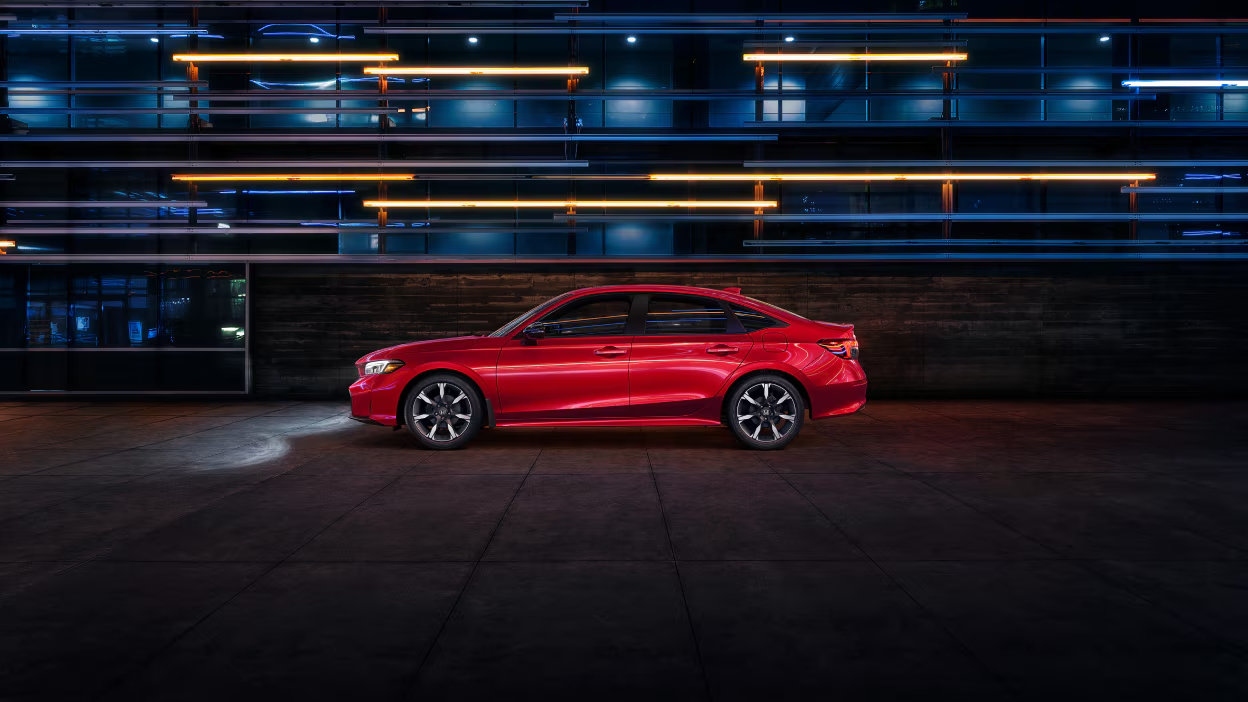
An In-Depth Look at All of the Different Engines You Can Choose in a 2026 Honda Civic
The Honda Civic has always been celebrated for being many things to many people — practical commuter, sporty hatchback, fuel-efficiency champion,...
Read more
If you've been shopping for a new Honda recently, you've almost certainly come across the name Honda Sensing. It appears across the lineup — from the Civic to the Pilot — and it's consistently highlighted as one of the most important features a new Honda offers. But what exactly is Honda Sensing, what does it do, and why does it matter? Here's a clear, complete look at the technology that has helped make Honda one of the safest vehicle brands on the road.
Honda Sensing is Honda's suite of advanced safety and driver assistance technologies, bundled together under a single name and included as standard equipment on the vast majority of new Honda vehicles. Rather than offering these features as optional extras at additional cost, Honda made a deliberate decision to make them standard — because the company believes every driver deserves access to the best available safety technology, regardless of which trim level they choose.
The system uses a combination of a front-facing camera and a radar sensor mounted behind the windshield to monitor the road ahead, detect potential hazards, read traffic signs, and assist the driver in maintaining safe speed and lane position. It works continuously and largely invisibly — most of the time, you simply drive, and Honda Sensing works in the background to make your drive safer.
Honda Sensing is not a single feature — it's a collection of distinct systems, each addressing a specific aspect of driving safety. Here is what each one does:
Collision Mitigation Braking System (CMBS)
The Collision Mitigation Braking System monitors the road ahead for vehicles and pedestrians. If the system detects that a collision is imminent and determines that the driver has not taken sufficient action, it first alerts the driver with audible and visual warnings. If no corrective action is taken, the system can automatically apply the brakes to reduce the severity of the collision or avoid it entirely.
In real-world driving conditions — a distracted moment on the highway, a pedestrian stepping out unexpectedly — this system has proven capable of preventing and mitigating collisions that human reaction time alone might not have caught in time.
Road Departure Mitigation System (RDM)
The Road Departure Mitigation System monitors the vehicle's position relative to lane markings. If the system detects that the vehicle is drifting toward or beyond the edge of the road — without a turn signal being activated — it alerts the driver and can apply gentle steering torque and braking to guide the vehicle back into the lane. On long highway stretches between Duncan and Victoria, or on winding rural roads in the Cowichan Valley, this system provides an important safety net against the kind of gradual drift that driver fatigue or momentary inattention can cause.
Lane Keeping Assist System (LKAS)
Lane Keeping Assist works in conjunction with Road Departure Mitigation but focuses specifically on keeping the vehicle centred within a detected lane at highway speeds. When lane markings are clearly visible, the system applies subtle steering inputs to help maintain lane position. It's designed to complement the driver — not replace them — and disengages immediately when the driver steers or signals intentionally.
Adaptive Cruise Control (ACC) with Low-Speed Follow
Standard cruise control maintains a fixed speed regardless of what's ahead. Adaptive Cruise Control does something much more sophisticated: it monitors the vehicle ahead and automatically adjusts your speed to maintain a safe following distance. If the vehicle ahead slows, your Honda slows with it. If traffic clears, the vehicle smoothly accelerates back to your set speed. The Low-Speed Follow feature extends this capability into stop-and-go traffic — the vehicle can brake to a complete stop and resume moving with the flow of traffic, significantly reducing driver fatigue in congested conditions.
Traffic Sign Recognition (TSR)
Traffic Sign Recognition uses the front camera to read speed limit signs and other road signs, displaying the detected speed limit on the instrument cluster so the driver always has a clear reference. It's a straightforward feature that proves consistently useful — particularly when speed limits change frequently or when signage is easy to miss.
Auto High-Beam (AHB)
Auto High-Beam automatically switches between high and low beams based on detected oncoming traffic and vehicles ahead. It ensures maximum visibility in dark rural conditions while automatically dimming to avoid blinding other drivers — a small but genuinely useful feature for anyone who drives frequently at night on Vancouver Island's less-lit roads.
Honda Sensing on Different Models
While the core Honda Sensing suite remains consistent across the lineup, Honda continues to expand and refine the technology with each new model year and on higher trim levels. Some newer Honda models feature an updated version called Honda Sensing 360, which adds a wider sensing field using additional radar units — providing blind spot monitoring, a front cross-traffic alert, and wider-angle detection that further expands the system's awareness of the vehicle's surroundings.
On models like the 2026 Honda Odyssey and select higher trims of other models, Honda Sensing 360 represents the next evolution of the platform — and a preview of where Honda's safety technology is heading across the full lineup.
Why Honda Sensing Matters
The practical value of Honda Sensing goes beyond individual features. Collectively, these systems address the most common causes of road collisions: inattention, fatigue, following too closely, unintentional lane departure, and delayed reaction to changing traffic conditions. By providing real-time alerts and — when necessary — taking corrective action automatically, Honda Sensing reduces the consequences of the inevitable moments when human attention lapses.
For families in Duncan and across the Cowichan Valley, that layer of protection is meaningful. It means your teenagers have an extra set of electronic eyes when they borrow the car. It means long drives down the Island are less fatiguing. It means the unexpected — a child running into the road, a vehicle stopping suddenly on the Trans-Canada — is met with faster response than reflexes alone can deliver.
Honda Sensing doesn't make a vehicle drive itself. But it makes every driver a safer one — and that's exactly the point.
To learn more about Honda Sensing and experience it firsthand, visit Discovery Honda in Duncan for a test drive. Our team will walk you through exactly how each system works on the model you're interested in and show you why Honda Sensing is one of the most compelling reasons to choose a new Honda.
An In-Depth Look at All of the Different Engines You Can Choose in a 2026 Honda Civic
The Honda Civic has always been celebrated for being many things to many people — practical commuter, sporty hatchback, fuel-efficiency champion,...
Read more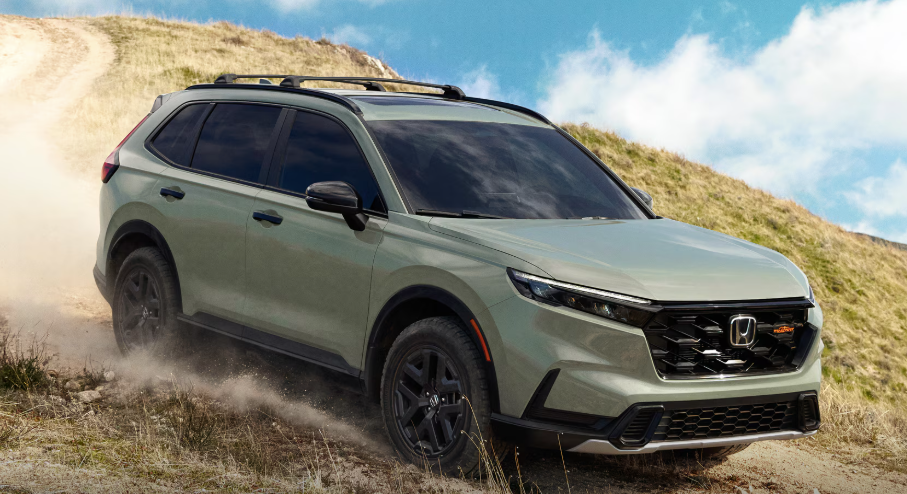
5 Reasons 2026 Honda CR-V Owners Love Their Vehicle
The Honda CR-V has been one of Canada's best-selling SUVs for decades — and the 2026 model makes it easy to understand why. It's the kind of...
Read morePowered and developed by
